
The Virgin Suicides
Thoughts on Gender and American Society after Reading Jeffrey Eugenides's Novel and Rewatching Sofia Coppola's 1999 Film Adaptation

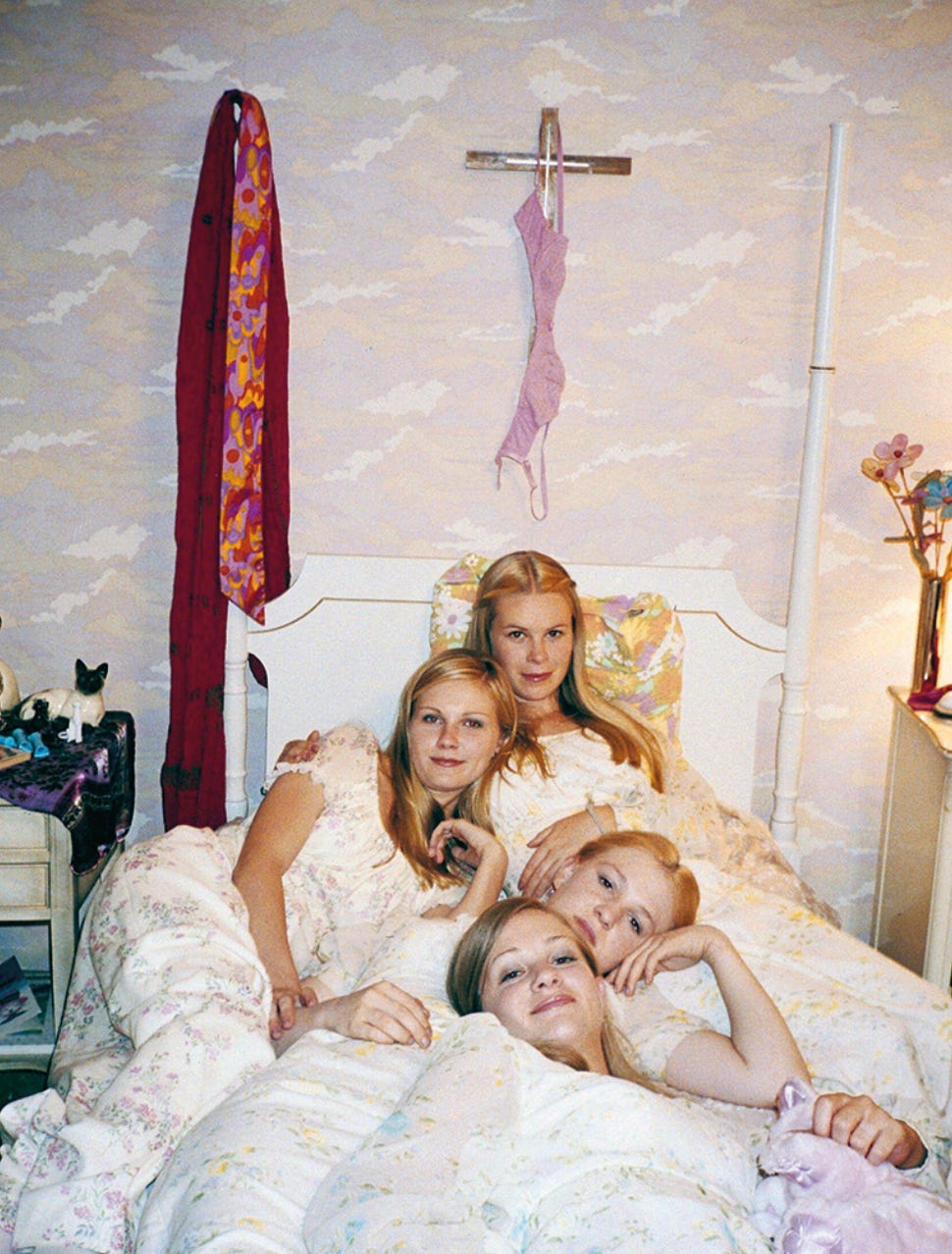
Kurt Cobain famously said, “Nobody dies a virgin. Life fucks us all”.
I read Jeffrey Eugenide’s The Virgin Suicides for the first time after seeing my Spanish teacher publish an article about Sofia Coppola’s film adaptation. Reading is an amazing way to escape and enter another world other than your own-blissfully dissociating if you will. I think this realization allowed me to connect with the five Lisbon sisters-Cecelia, Lux, Mary, Therese, and Bonnie who all seemed to be in a world those around them were unable to comprehend. Sofia Coppola’s 1999 film adaptation brought the story to life like a beautiful fever dream. Coppola’s version expanded on the beauty of girlhood, giving the Lisbon sisters more grace.
“We just want to live. If anyone would let us” (pg. 128). Being a woman is both divine and a tremendous burden to carry. Women are born into this world with an immediate debt to society. We are expected to perform, to appease, and to accept a harsh level of criticism that borders on abuse. Women have always been valued for beauty but diminished and misunderstood in almost every other sense. The inner worlds we live in are both a blessing and a curse-a prison and a refuge. We are born being told we have agency, yet society expects us to follow down a path already chosen for us: marriage, children, and withering away. Most of us simply want the right to exist without scrutiny, threat of violence, and freedom of choice.
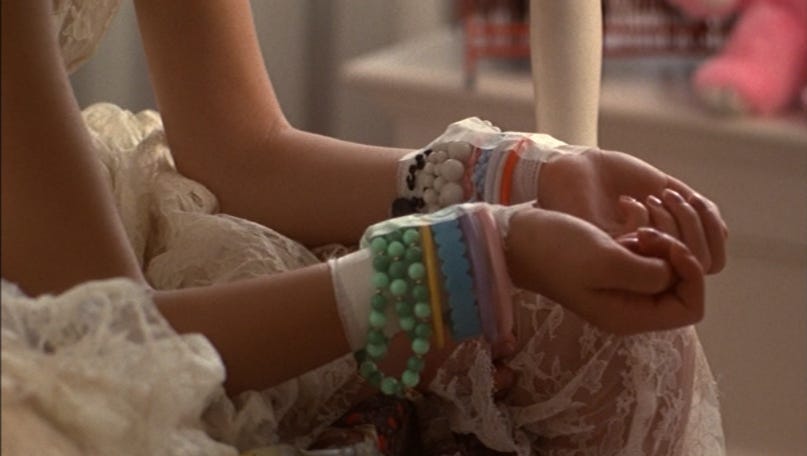
“The paramedics took Cecelia to Bon Secours Hospital on Kerchedval and Maumee. In the emergency room Cecelia watched the attempt to save her life with an eerie detachment. Her yellow eyes did not blink, nor did she flinch when they stuck a needle in her arm. Dr. Armonson stitched her wrist wounds. Within five minutes of the transfusion he declared her out of danger. Chucking her under her chin, he said, ‘What are you doing here, honey? You’re not even old enough to know how bad life gets.’ And it was then that Cecelia gave orally what was to be her only form of suicide note, and a useless one at that, because she was going to live: ‘Obviously, Doctor,’ she said, ‘you’ve never been a thirteen-year-old girl.’ (pg. 5)
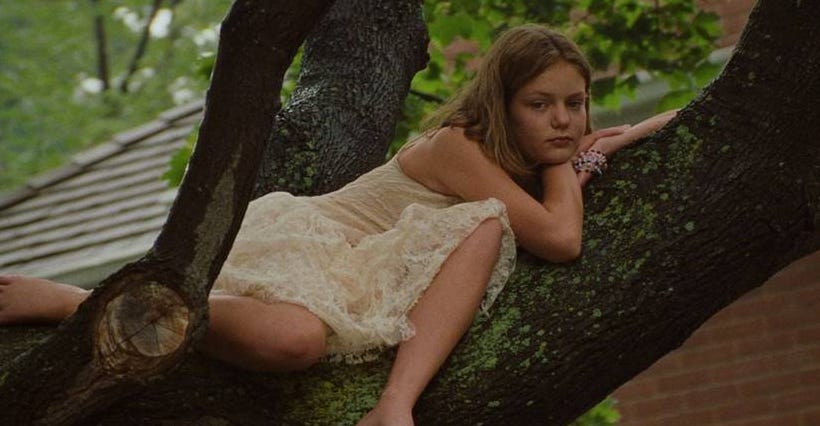
To be a girl is to be like a flower. You’re admired for your beauty when you bloom, you’re plucked for the enjoyment of others or as to be owned, and you wilt fast-especially if not properly tended to. Nature is an enduring theme of The Virgin Suicides-specifically flowers and trees. They represent life and the stages of girlhood to adolescence and adolescence to early womanhood. They represent the Lisbon sisters themselves trying to grow into women in a sick society, trapped by the expectations and rules of their parents and community. “The plants were expected to grow in the light of a dungeon. Hoodlums jumped the back fence and ran through the greenhouse, uprooting plants for the fun of it” (pg. 105). The reality of growing into a woman is a lot less beautiful than a flower blossoming.
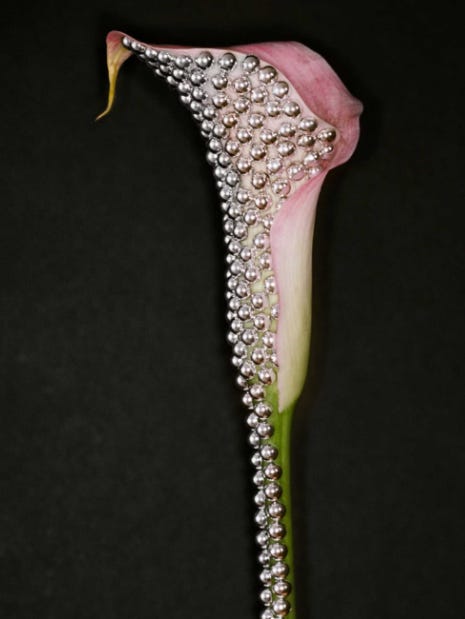
Flowers, or more specifically, “deflowering” has also always been associated with virginity. The title of the film and the book tie in with a section of the novel that details one of Lux Lisbon’s supposed favorite songs called “Virgin Suicide.” The lyrics of this song are as follows:
Virgin suicide
What was that she cried?
No use in stayin’
On this holocaust ride
She gave me her cherry
She’s my virgin suicide
The Lisbon sisters are the epitome of the Madonna-whore complex-an aspect of male psychology first coined by Freud used to sum up men’s relationship to women. The psychology behind it is a paradox, described as “Where such men love, they have no desire, and where they desire, they cannot love.” The concept is a spectrum-with pious, virginity at one end and feral sexuality at the other. The Madonna aspect is the conservative, religious virtuosity that Mrs. Lisbon aims to uphold through raising her daughters and which society uses to both praise and oppress women. It can be seen through The Lisbon girls worshipping and looking to the Virgin Mary for deliverance. The whore side represents the freedom and punishment that comes from a woman expressing her sexuality or promiscuity in the same way Lux does. The concept itself is inevitably the reason why Trip Fontaine and Lux never speak again after the homecoming dance.
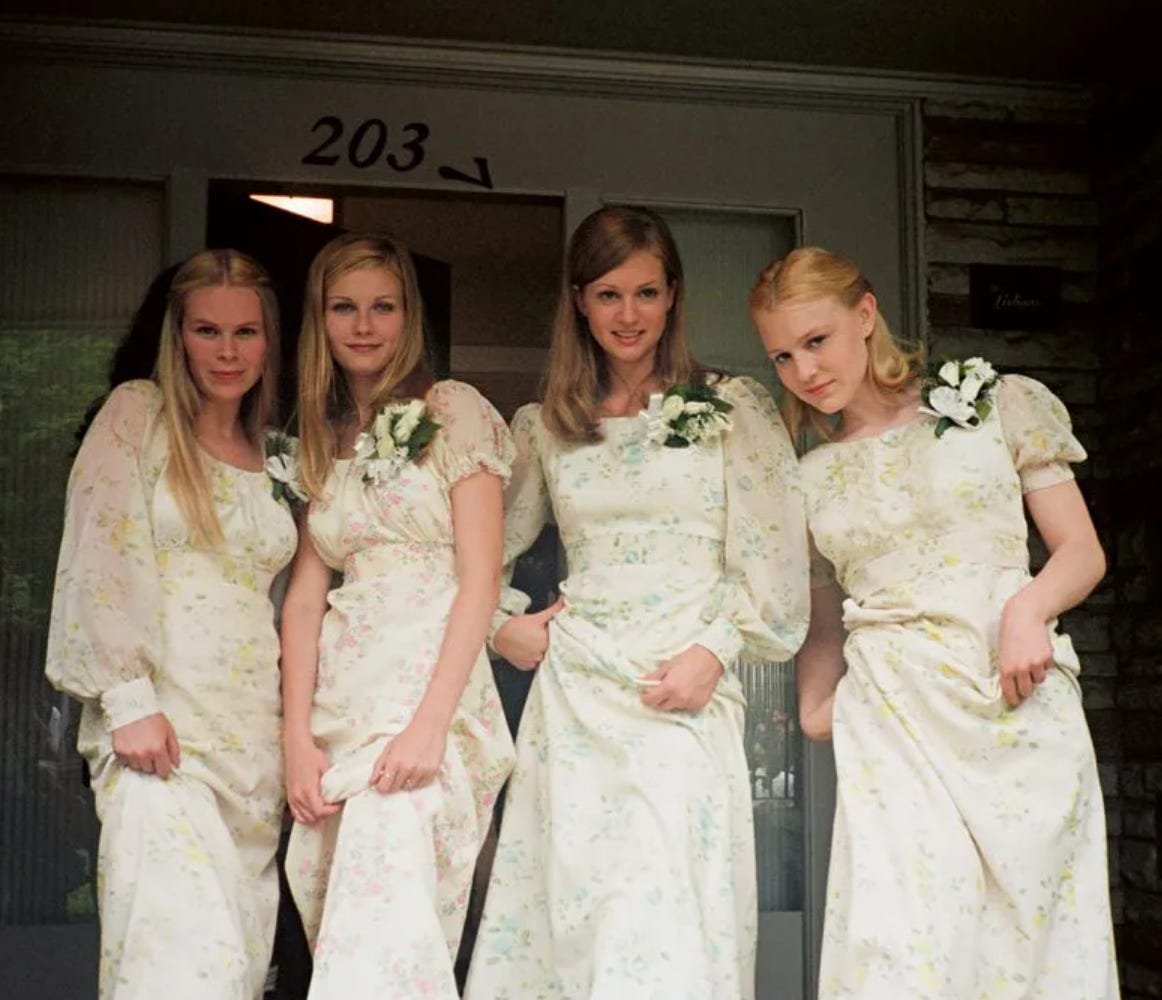
The conservative movement within the United States aims to keep women in the home and prevent them from liberating themselves through education, independence, and financial freedom. They believe in restricting a woman’s right to birth control via rolling back Roe v. Wade and the ability for women to study particular subject areas such as engineering. They’re the women with bleach blonde hair wearing flower dresses no one would rationally be caught dead in going on and on about the benefits of tradwifery and how undeniably happy they supposedly are to be trapped at home upholding traditional, (often Republican) Christian conservatism.
Lux is the only sister who represents the whore side of the complex. In fact, she proves that trying to impose a pious, ultraconservative way of life can have the opposite effect and make people feral-itching to experience what they’re told is forbidden. It also leads to women associating sex with love-something men use to manipulate them into sleeping with them. The catch is that sleeping with men or not sleeping with men doesn’t guarantee them to love you, but an exaggerated detachment to sex definitely causes harm-both emotional and physical. When Lux loses her virginity, she says “I always screw things up. I always do” in the middle of it, knowing that once she has sex that it will lead to the boy she’s seeing to eventually leave. After, Mrs. Lisbon pulls all of the girls out of school as punishment and they slip into a deep depression.
“In Dr.Hornicker’s opinion, Lux’s promiscuity was a commonplace reaction to emotional need. ‘Adolescents tend to seek love where they can find it. Lux confused the sexual act with love. For her, sex became a substitute for the comfort she needed as a result of her sister’s suicide.” (pg. 84).
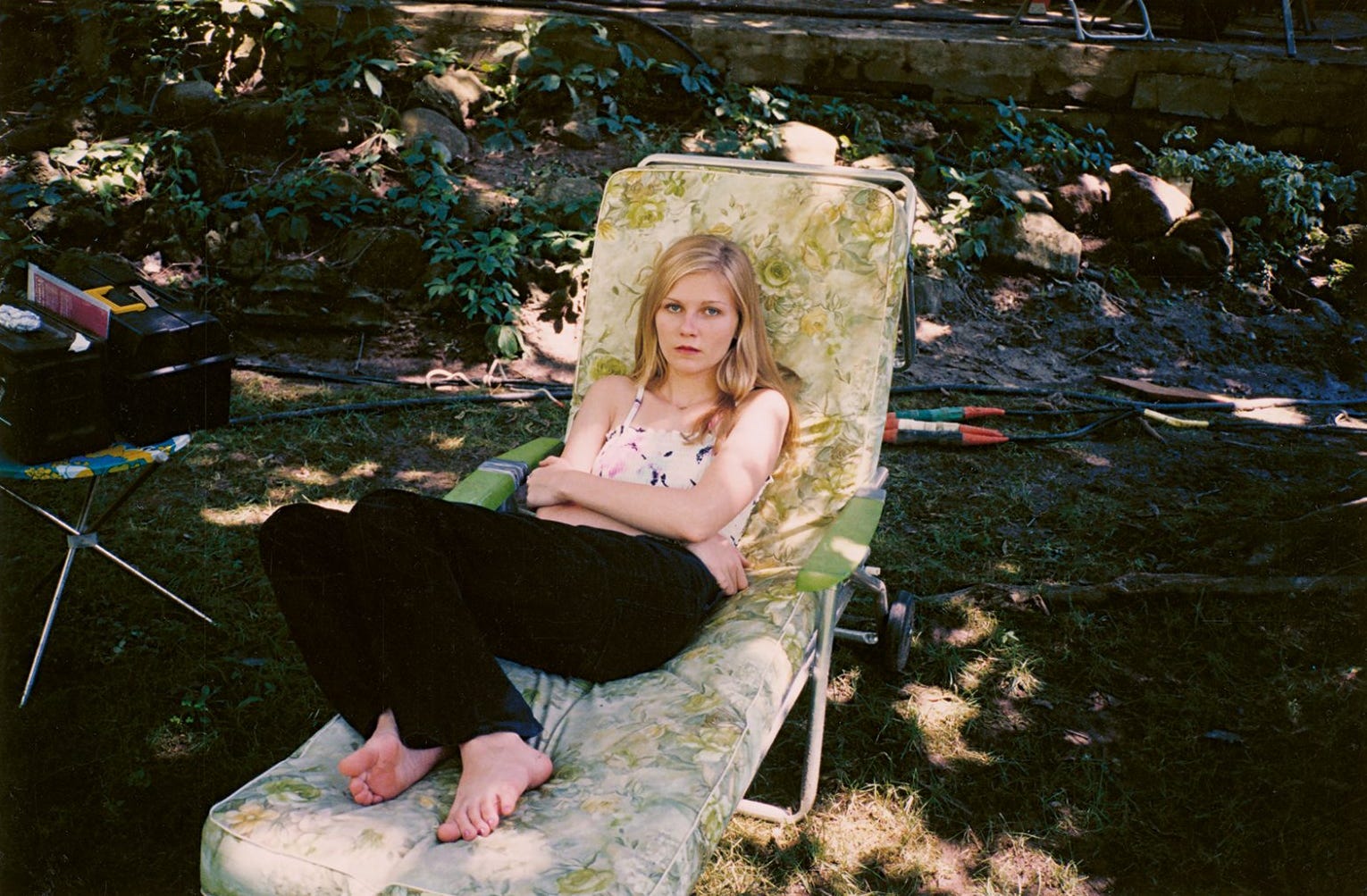
No matter where you fall on the Madonna-whore spectrum, women can’t seem to win. The girls being cooped up in their house and deprived of interaction and exploration of themselves and their sexuality creates oppression and depression, but realizing the harsh realities of the world resulted in the same semblance of despair. The Virgin Suicides displays the harm that comes from the way society functions in America. “Adolescence is much more fraught with pressures and complexities than in years past. Often, in today’s world, the extended childhood American life has bestowed on its young turns out to be a wasteland, where the adolescent feels cut off from both childhood and adulthood. Self-expression can often be frustrated” (pg. 92). The system was never designed for us-it operates to satisfy an outdated version of toxic masculinity.
“We found Mr. Buell just down the hall from his wife, in a bedroom with a sporting theme. On the shelf stood a photograph of his first wife, whom he had loved ever since divorcing her, and when he rose form his desk to greet us, he was still stooped form the shoulder injury faith had never quite healed. ‘It was like anything else in this sad society’, he told us. ‘They didn’t have a relationship with God.’ When we reminded him about the laminated picture of the Virgin Mary, he said, ‘Jesus is the one she should have had a picture of.’ (pg. 16).
To be a boy is to be misguided, stumbling to find proper guidance on what it truly means to be a man. To become a man is more often than not a denial of one’s emotions. In traditional toxic masculinity, femininity is not something to tap into in one’s self or to be honored, protected, or fully understood-it is a product to prey on, judge, and consume. What men fail to realize is that women are the center of the universe-not them. Without us, life ceases to exist or have meaning. Failing to understand women is a denial of one’s own self and the femininity everyone has.
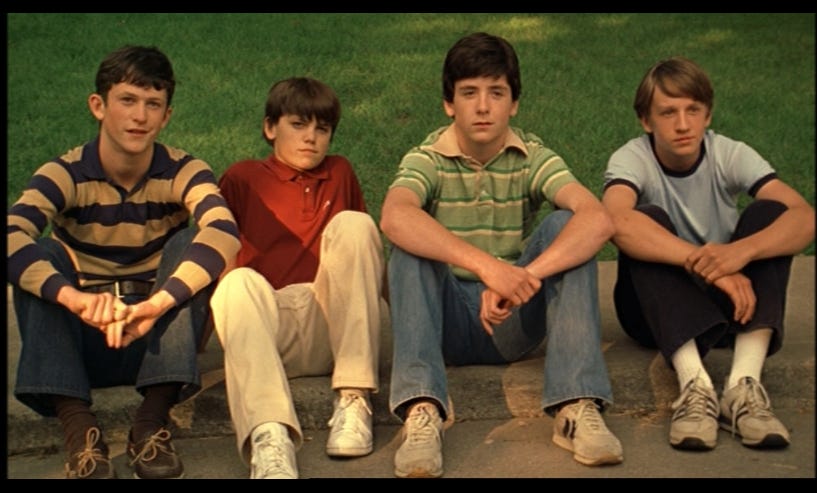
“At first the boys said nothing, too overwhelmed by the Lisbon girls’ volubility. Who had known they talked so much, held so many opinions, jabbed at the world’s sights with so many fingers? Between our sporadic glimpses of the girls they had been continuously living, developing in ways we couldn’t imagine…” (119-120).
The Virgin Suicides is narrated by a pathetic, obsessive group of boys who essentially stalk The Lisbon girls. They observe the world through a lense of their own desire, failing to ever fully understand the emotions and reasoning behind the Lisbons’ actions. “Lux had forgotten her math book one day and had to share with Tom Faheem. In the margin, she had written ‘I want to get out here.’ How far did that wish extend? Thinking back, we decided the girls had been trying to talk to us all along, to elicit our help, but we’d been to infatuated to listen. Our surveillance had been so focused we missed nothing but a simple returned gaze. Who else did they have to turn to? Not their parents. Not their neighborhood. Inside their house they were prisoners; outside, lepers. And so they hid from the world, waiting for someone-for us-to save them” (pg. 193).
Trip Fontaine was supposedly different. Trip Fontaine was raised by two gay men who taught him the importance of looks-something women have always had to contend with. His dad was also a garden buff-signifying the femininity and life that existed more in Trip and his family than other boys and men in town. “No boy was ever so cool and aloof. Fontaine gave off the sense of having graduated to the next stage of life, of having his hands thrust into the heart of the real world…destined for capitalism and not scholarship, as his drug deals already augured.” (pg. 73).
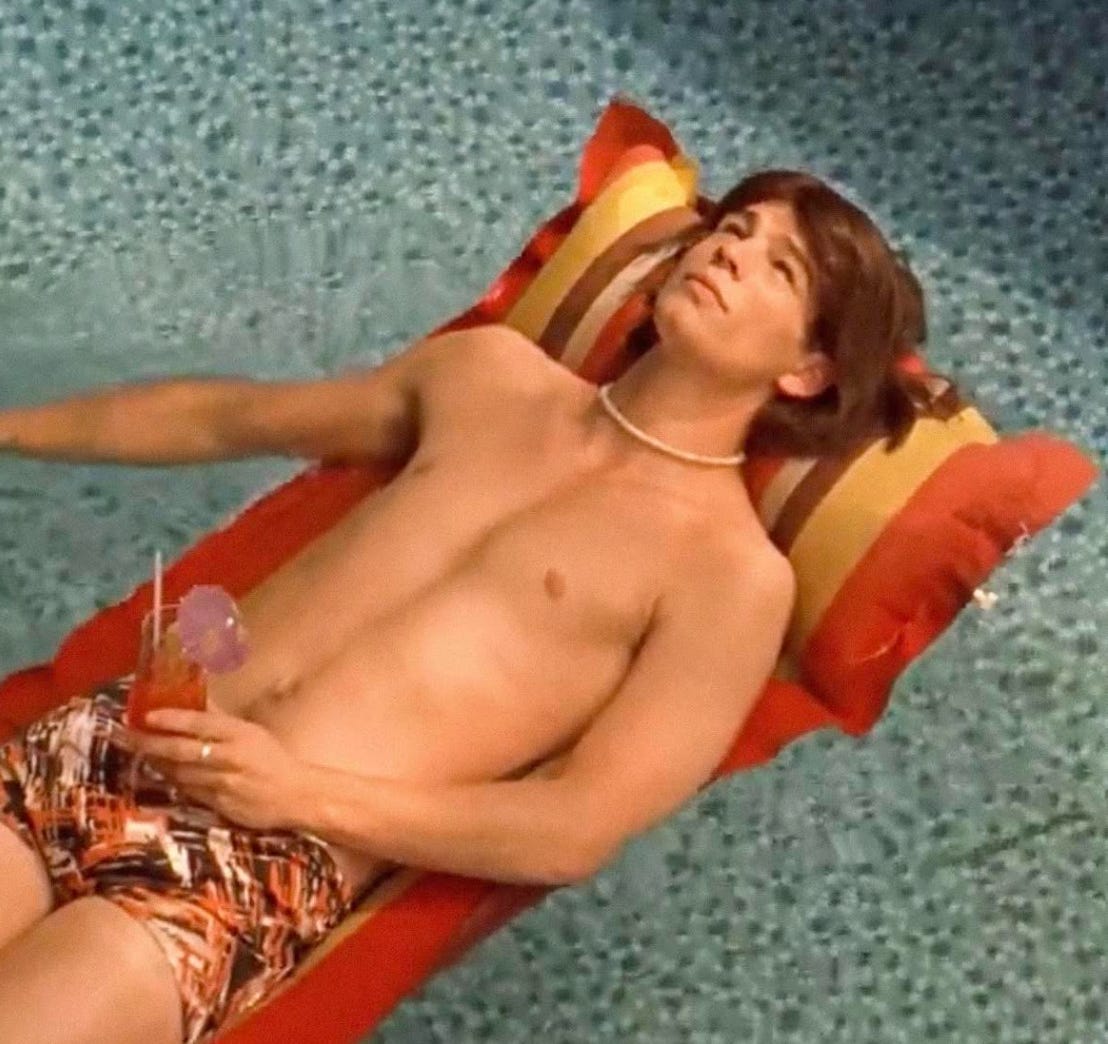
Trip never struggled to find the confidence to talk to women. In fact, he got accustomed to the slew of women who threw themselves at him. “Their desire was silent yet magnificent, like a thousand daisies attuning their faces towards the path of the sun” (66). He bloomed into a handsome man no one saw coming, equally obsessed and fawned over in the same way the Lisbon girls were. He was Lux’s equal-most attractive in school, brave enough to break the rules, and sexually promiscuous. “The girls were right in choosing to love Trip, because he was the only boy who could keep his mouth shut. By nature Trip Fontaine possessed the discretion of the world’s greatest lovers, seducers greater than Casanova because they didn’t leave behind twelve volumes of memoirs and we don’t even know who they were” (pg. 68). Trip was more in touch with his feminine side than the narrators and other men in the novel.
He lost his virginity to a 37 year old Las Vegas card dealer named Gina Desander on a trip to Acapulco, being admired and preyed on for his looks and youth. He refused to take off the pucca shell necklace she gifted to him after she marked his transformation into a man and sex symbol. While Trip was sentimental and transformed by losing his virginity, he had no qualms about taking Lux’s and discarding her. He retells the narrators that he never got over her. Instead of allowing himself to experience love fully, he returns to the cheap thrills of empty sex and substances-the pillars of modern, toxic masculinity.
“‘She was the still point of the turning world’, he told us, quoting Eliot whose Collected Poems he had found on the shelf of the detoxification center. For the eternity that Lux Lisbon looked at him, Trip Fontaine looked back, and the love he felt at that moment, truer than all subsequent loves because it never had to survive real life, still plagued him, even now in the desert, with his looks and health wasted” (pg. 75).
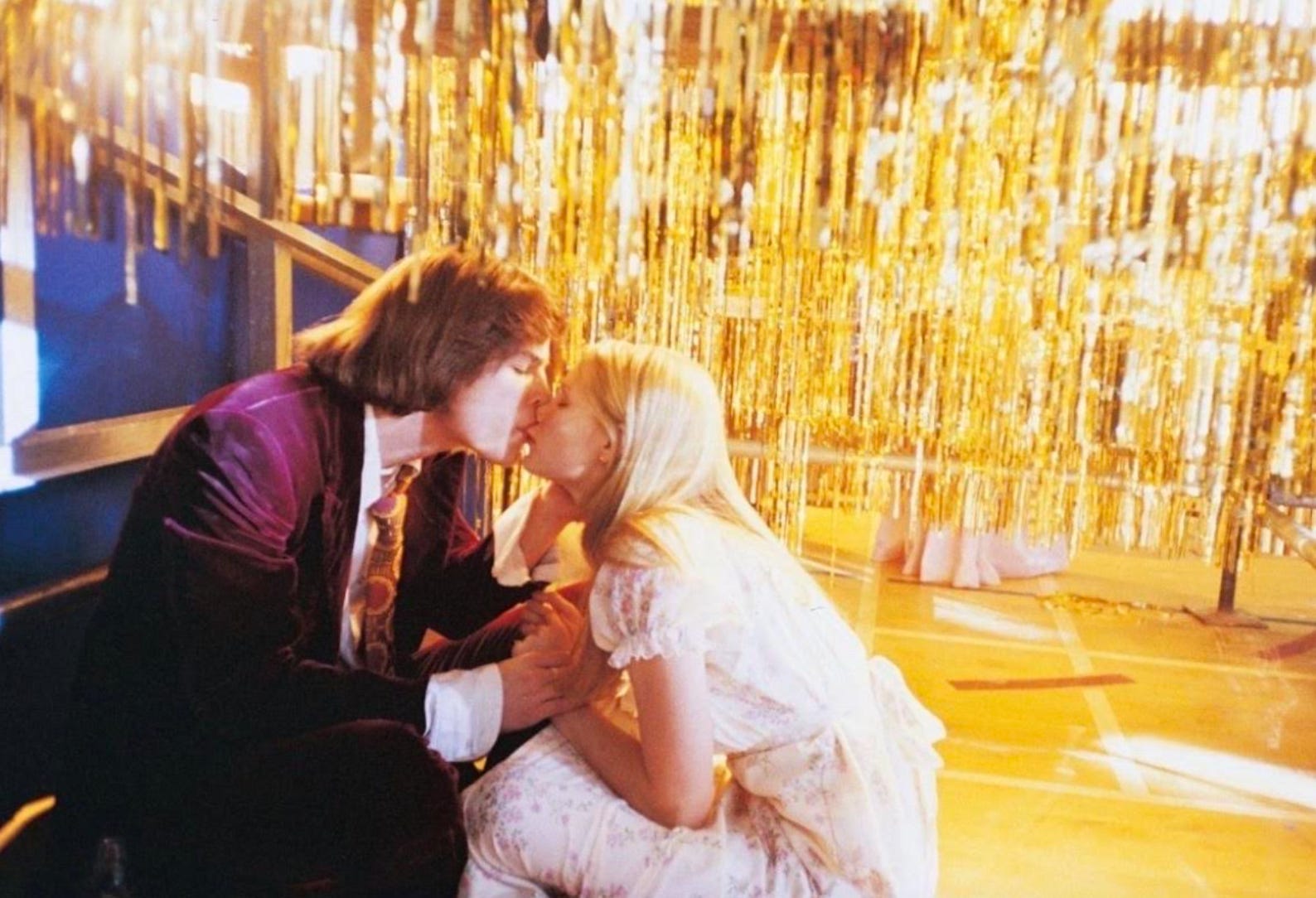
So much of the youth has become stunted adults who’ve given up on their dreams or have fallen into the treacherous machine of capitalism, imperialism, and diminishing feminism. America is so intent on pretending we’re happy all the time. The dreamers-the ones who know a different societal construct is possible and effective-still exist, but it can be hard for their souls not to get crushed along the way. Most people conform because it’s the easier option. The reality is that forging your own path is scary, takes hard work, and an unshakeable sense of confidence and faith in oneself.
“But now Mr. Bates didn’t scream or try to get the truck’s license plate, nor did Mrs. Bates, who had once wept when we set off firecrackers in her state-fair tulips-they said nothing, and our parents said nothing, so that we sensed how ancient they were, how accustomed to trauma, depressions, and wars. We realized that the version of the world they rendered for us was not the world they really believed in, and that for all their caretaking and bitching about crabgrass they didn’t give a damn about lawns” (pg. 52).
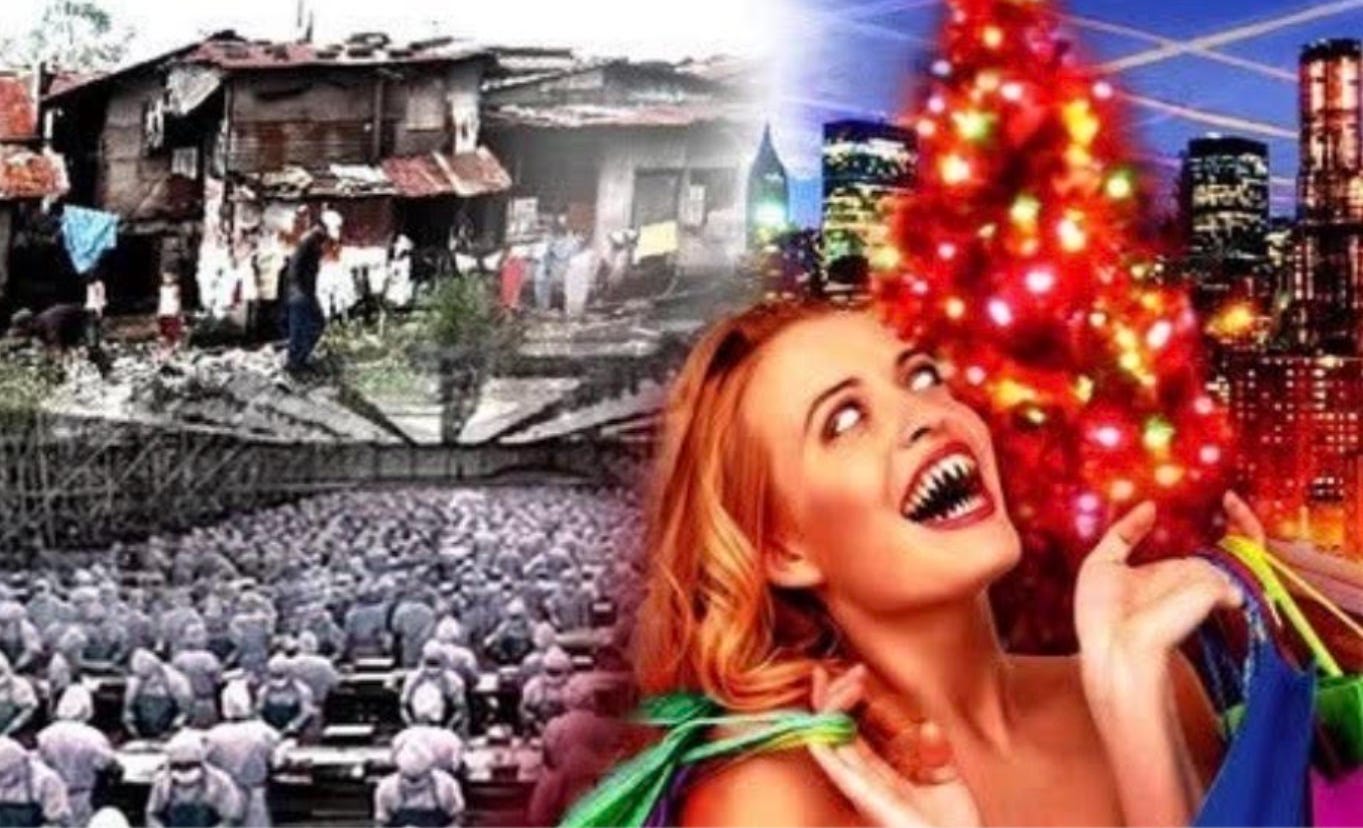
American society is built on hypocrisy. “‘Capitalism has resulted in material wellbeing but spiritual bankruptcy.’…Something sick at the heart of the country had infected the girls. Our parents thought it had to do with our music, our godlessness, or the loosening of morals regarding sex we hadn’t had. Mr. Hedlie mentioned that fin-de-siecle Vienne witnessed a similar outbreak of suicides on the part of the young, and put the whole thing down to the misfortunes of living in a dying empire” (pg. 226).
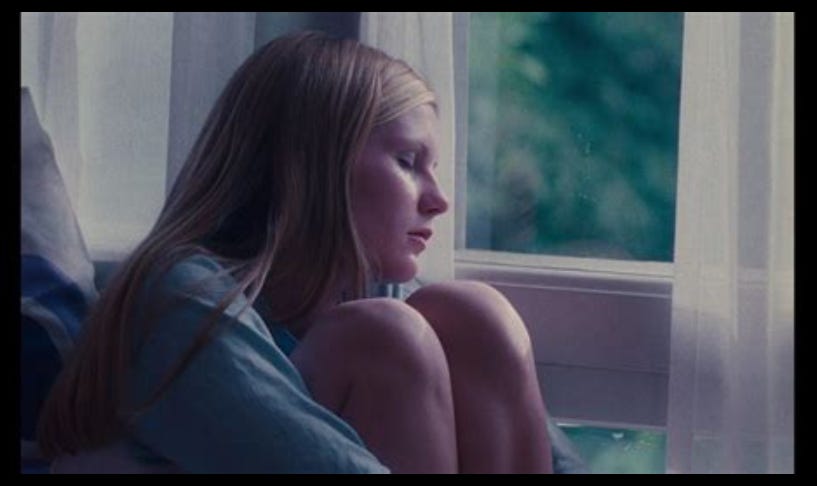
“Inside, we got know girls who had never considered taking their own lives…The girls were monstrous in their formal dresses, each built around a wire cage. Pounds of hair were secured atop their heads. Drunk, and kissing us, or passing out in chairs, they were bound for college, husbands, child-rearing, unhappiness only dimly perceived-bound, in other words, for life” (pg. 230).
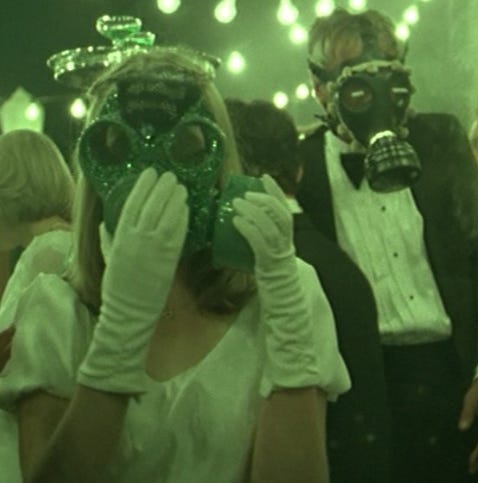
What I love most about The Virgin Suicides is the irony of the novel being written by a man as a critique of American society, gender, and how a society fails not only women-but the youth in general. Just because it appears pretty doesn’t make womanhood any less of a prison. But, within that prison is a plethora of wisdom. Society failed them, but in the end, the Lisbon girls seemed to know a secret no one around them seemed to know or care to admit about life and its prospects.
“Now and then, of course, as we were slowly carted into the melancholic remainder of our lives (a place the Lisbon girls, wisely, it began to seem, never cared to see)…They had killed themselves over our dying forests, over manatees maimed by propellers as they surfaced to drink from garden hoses; they had killed themselves at the sight of used tires stacked higher than the pyramids; they had killed themselves over the failure to find a love none of us could ever be. In the end, the tortures tearing the Lisbon girls pointed to a simple reasoned refusal to accept the world as it was handed down to them, so full of flaws.” (pg. 239).
At a time where climate change, world war, fascism, the cost of living crisis, and humans are more disconnected than ever, choose not to be a shrinking violet. My main takeaway from The Virgin Suicides is to live your fucking life.